Pisa, PI, Italy: A City of Timeless Beauty and Italian Charm
Nestled in the heart of Tuscany, pisa pi italy, often abbreviated as “PI,” stands as one of Italy’s most recognizable and historically rich cities. Known worldwide for its iconic Leaning Tower, Pisa offers far more than a single architectural wonder. The city is a tapestry of medieval splendor, cultural refinement, and university life that bridges the past and present in a way few destinations can match.
Pisa is located near the mouth of the River Arno, about 80 kilometers west of Florence. Its strategic position has shaped its destiny since ancient times. From maritime dominance to a hub of learning and innovation, Pisa’s journey through history mirrors the evolution of Italy itself.
In this article, we’ll explore every facet of Pisa: its origins, landmarks, cuisine, cultural pulse, and what makes it a must-visit city for travelers seeking authenticity and inspiration.
The Origins of Pisa: From Ancient Port to Powerhouse
The story of Pisa begins long before its medieval fame. Archaeological findings suggest that the area was inhabited as early as the 9th century BC by the Etruscans, one of the most advanced civilizations of pre-Roman Italy. Its location along the Arno River and proximity to the sea made it a natural site for commerce and navigation.
By the time the Romans arrived, Pisa was already an established settlement. The Romans fortified the city and recognized its maritime potential, using its harbor for naval expeditions in the Mediterranean. Pisa’s Latin name, Pisae, appears in records as early as the 2nd century BC.
During the early Middle Ages, Pisa evolved into one of Italy’s four great maritime republics, alongside Venice, Genoa, and Amalfi. The Pisans became masters of trade, shipbuilding, and exploration, extending their influence across the Mediterranean and even participating in the Crusades. Their wealth and prestige gave rise to a period of architectural and artistic flourishing that would define the city’s identity for centuries.
The Leaning Tower of Pisa: A Marvel of Human Error and Genius
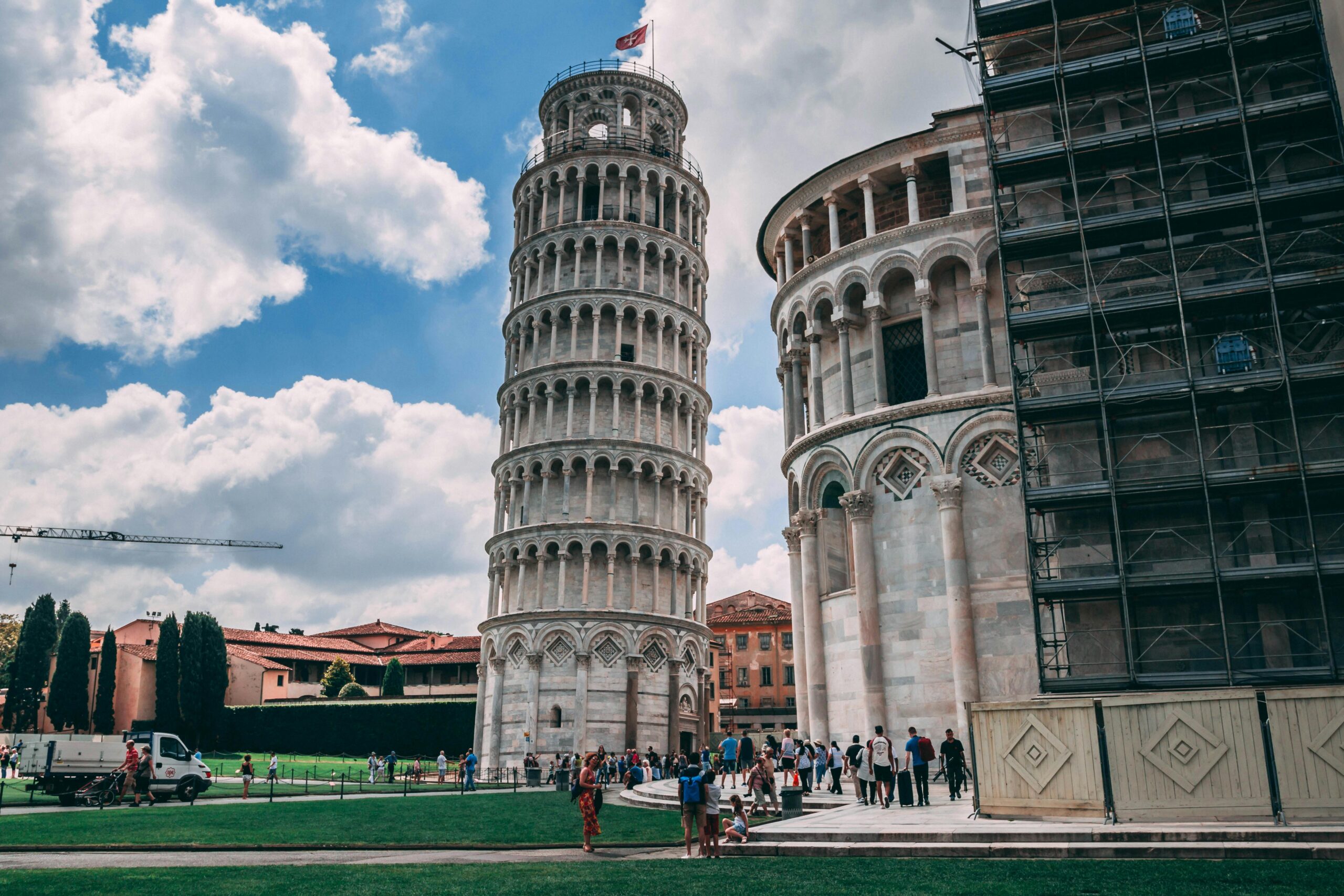
No discussion about Pisa is complete without mentioning its most famous symbol: the Leaning Tower of Pisa (Torre Pendente di Pisa). Constructed as the freestanding bell tower of the Cathedral of Santa Maria Assunta, this architectural wonder was never meant to lean.
The tower’s construction began in 1173, and the first tilt appeared shortly after the completion of the second floor. The soft, unstable subsoil could not support the tower’s weight, leading to a gradual inclination. Yet, instead of abandoning the project, Pisan architects adapted their plans, compensating for the tilt as construction progressed.
After nearly two centuries, the tower was completed in 1372, standing 56 meters tall and leaning about four degrees off vertical. The tilt continued to increase over time, prompting extensive restoration work in the 20th and early 21st centuries. Engineers successfully stabilized it, ensuring that future generations could continue to marvel at this monument’s improbable beauty.
Today, visitors can climb the 294 steps to the top, where breathtaking views of Pisa and the surrounding countryside await. The experience is both thrilling and surreal, as one ascends a structure that seems to defy the laws of gravity.
The Piazza dei Miracoli: A Place of Heavenly Architecture
The Leaning Tower is only one element of Pisa’s crown jewel: the Piazza dei Miracoli, or Square of Miracles. This UNESCO World Heritage Site encompasses some of the finest examples of Romanesque art and architecture in Europe.
The Cathedral of Santa Maria Assunta
At the heart of the square stands the Duomo di Pisa, a masterpiece of Pisan Romanesque design. Built in the 11th century, the cathedral’s white and grey marble façade gleams under the Tuscan sun, decorated with arches, columns, and intricate carvings. Inside, visitors are greeted by a majestic nave with a gilded ceiling, mosaics, and the remarkable pulpit sculpted by Giovanni Pisano.
The Baptistery of St. John
Next to the cathedral lies the Baptistery of St. John, the largest baptistery in Italy. Its circular form, marble cladding, and Gothic dome create a harmonious blend of styles. The building’s acoustics are extraordinary, and visitors often pause to hear the enchanting echoes of a single note reverberate through its interior.
The Camposanto Monumentale
Completing the ensemble is the Camposanto Monumentale, or monumental cemetery. Legend claims that it was built around sacred soil brought from Golgotha during the Crusades. The cloistered walls are adorned with frescoes that depict scenes from life, death, and resurrection, offering a poetic reflection on human existence.
Together, these monuments embody the spirit of medieval Pisa, where faith, art, and ingenuity converged to produce something truly miraculous.
The University of Pisa: A Beacon of Knowledge
Beyond its historical grandeur, Pisa is a city of intellect and innovation. Founded in 1343, the University of Pisa ranks among Italy’s oldest and most prestigious universities. It has produced some of the brightest minds in history, including Galileo Galilei, the father of modern science.
The university’s influence extends throughout the city, infusing it with youthful energy and cultural dynamism. Cafés buzz with students engaged in philosophical debates, while laboratories and research centers push the boundaries of knowledge in physics, engineering, and medicine.
Pisa’s academic heritage reinforces its reputation as a city that values both tradition and progress. This duality makes it an extraordinary destination for those who appreciate the beauty of learning as much as the allure of travel.
Exploring Pisa Beyond the Tower
Many tourists visit Pisa for a single day, often arriving on buses from Florence or Lucca to snap photos of the Leaning Tower before leaving. Yet, those who linger discover a city rich in charm and authenticity.
The Arno River and Its Bridges
The Arno River, which also flows through Florence, meanders gracefully through Pisa. Its banks are lined with pastel-colored buildings, each reflected in the water’s shimmering surface. The Ponte di Mezzo, the main bridge crossing the Arno, serves as a lively gathering point, especially during the annual Gioco del Ponte festival, a reenactment of medieval battles held every June.
Piazza dei Cavalieri
Once the political heart of the Pisan Republic, the Piazza dei Cavalieri (Square of the Knights) is another architectural gem. The square was redesigned by Giorgio Vasari in the 16th century under the commission of the Medici family. The Palazzo della Carovana, now home to the elite Scuola Normale Superiore, features intricate frescoes and sculptures that celebrate Pisa’s noble past.
Museums and Cultural Attractions
Art lovers can explore the Museo dell’Opera del Duomo, which houses sculptures and treasures from the Piazza dei Miracoli, or the Museo Nazionale di San Matteo, renowned for its medieval paintings and wooden sculptures. The Botanical Garden of Pisa, founded in 1544, is one of the oldest in the world and offers a tranquil escape from the city’s bustle.
The Taste of Pisa: Tuscan Flavors at Their Finest
Tuscan cuisine is celebrated across the globe, and Pisa offers a genuine taste of the region’s culinary excellence. The city’s gastronomy reflects a philosophy of simplicity, freshness, and respect for local ingredients.
Traditional Dishes
One of Pisa’s most beloved dishes is Cecina, a thin, crispy pancake made from chickpea flour, olive oil, and salt. It’s often enjoyed as street food or paired with a glass of local wine. Another regional favorite is Pappa al Pomodoro, a hearty tomato and bread soup that captures the essence of rustic Tuscan comfort.
Seafood also plays an important role, thanks to Pisa’s proximity to the Tyrrhenian Sea. Baccalà alla Pisana, a flavorful salt cod dish simmered with tomatoes and onions, exemplifies coastal cooking at its best.
Wine and Olive Oil
No Tuscan meal is complete without wine. Pisa’s surrounding countryside produces excellent reds, including Chianti Colline Pisane, known for its balance and depth. Olive oil from the region is equally renowned, prized for its smooth, peppery flavor that enhances every dish it touches.
Dining in Pisa is an experience that connects travelers with the land, the people, and centuries of tradition. Whether you dine in a family-run trattoria or a stylish riverside restaurant, every bite tells a story of Tuscany’s soul.
Festivals and Local Life
Pisa’s calendar brims with cultural events that showcase its traditions and community spirit.
The Luminara di San Ranieri, held every June 16th, transforms the city into a sea of light. Thousands of candles illuminate the Arno River’s embankments in honor of Pisa’s patron saint, Saint Ranieri. The following day, the Regatta of San Ranieri sees teams from the city’s historic neighborhoods compete in colorful rowing races on the river.
Another highlight is the Gioco del Ponte, a dramatic contest in which teams dressed in medieval armor push a heavy cart along the Ponte di Mezzo to claim victory for their side. These events blend history, rivalry, and festivity, creating memories that last a lifetime for participants and visitors alike.
Day Trips and Surrounding Wonders
Pisa’s location makes it an ideal base for exploring the treasures of Tuscany.
A short train ride brings you to Lucca, a charming walled city where you can cycle atop the Renaissance ramparts. Florence, the cradle of the Renaissance, lies less than an hour away, offering masterpieces by Michelangelo and Botticelli. To the west, the Versilia coast boasts sandy beaches and lively seaside resorts, while the Chianti hills invite wine lovers to savor some of Italy’s finest vintages.
For nature enthusiasts, the San Rossore Natural Park, just outside Pisa, provides serene walking and cycling trails through pine forests and wetlands rich in wildlife. This proximity to both culture and nature makes Pisa a truly versatile destination.
Modern Pisa: Balancing Heritage and Innovation
While steeped in history, Pisa continues to evolve. The city has embraced modernity without compromising its heritage. Its airport, Galileo Galilei International Airport, connects Pisa to major European cities, welcoming travelers eager to experience its charm firsthand.
The local government has invested in sustainability and urban renewal, improving public transport and restoring historic neighborhoods. Meanwhile, Pisa’s technology sector is growing, supported by university research and innovative startups. This fusion of past and future ensures that Pisa remains relevant and vibrant in the 21st century.
Travel Tips for Visiting Pisa
To make the most of your trip, here are some helpful insights for travelers:
-
Best Time to Visit: Spring (April to June) and autumn (September to October) offer pleasant weather and fewer crowds.
-
Getting Around: Pisa is compact and walkable. Most attractions are within a 20-minute stroll of each other.
-
Tickets for the Tower: Reserve tickets in advance online, as daily visitor numbers are limited.
-
Local Etiquette: Italians value politeness and personal connection. A friendly “Buongiorno” or “Grazie” goes a long way.
-
Hidden Gems: Explore the Santa Maria neighborhood for authentic trattorias and artisan shops away from tourist crowds.
Why Pisa Captures the Imagination
What makes Pisa so enchanting is its blend of contradictions. It is both ancient and youthful, scholarly and playful, monumental and intimate. The city’s beauty lies not only in its architecture but in the rhythm of its streets, the laughter in its piazzas, and the warmth of its people.
Every corner tells a story. The soft chime of bells from the Leaning Tower merges with the murmur of the Arno, creating a melody that speaks to the soul. Whether you are admiring marble façades or sharing a meal under the Tuscan sky, Pisa invites you to slow down and savor life.
Conclusion: Pisa, a Living Masterpiece of Italy
Pisa, PI, Italy, is far more than a postcard image of a leaning tower. It is a living masterpiece where history, art, and humanity intertwine. From the glory of its medieval republic to the brilliance of its modern university, Pisa embodies the essence of Italian spirit — resilient, creative, and endlessly captivating.
For travelers seeking a destination that combines beauty, intellect, and authenticity, Pisa is an unforgettable choice. It welcomes you not only to witness its monuments but to feel its soul. Once you experience Pisa, you carry a piece of its magic with you, forever.